


Thermory thermally modified ash, spruce, pine and thermo-radiata pine are available with fire-retardant treatment in collaboration with WOODSAFE® WFX™. Fire impregnation makes it possible to create exterior timber cladding with documented façade fire performance while retaining the natural appearance of thermally modified wood.
Developed for projects where regulatory requirements, architectural intent and long-term material behavior must work together, this solution supports the use of natural timber in applications where enhanced fire performance is required.
Download specifications

Fire performance at a glance
Thermory fire-retardant timber is available for exterior use with documented fire performance and weathering durability when specified and installed as part of the relevant tested system.
| Timber species: | Thermo-ash, thermo-spruce, thermo-pine, thermo-radiata pine |
| Fire reaction class: | Up to Euroclass B-s1, d0 |
| Exterior durability of fire performance: | EN 16755 EXT |
| Facade performance: | SP Fire 105 |
| Fire treatment system: | WOODSAFE® WFX™ |
| Fixings: | Stainless steel required |
| Appearance: | The treatment allows the wood to weather naturally over time. |
*Fire performance values apply to tested system configurations.
What is fire retardant wood?
Fire-retardant wood has been treated to improve its reaction-to-fire performance. Under EN 13501-1, Euroclass B-s1, d0 indicates limited contribution to fire, low smoke development and no flaming droplets.
This classification enables architects to specify timber cladding and timber façade systems for projects where enhanced façade fire performance must be demonstrated through testing and documentation.
Products available
Our fire-retardant timber range is available for a wide variety of timber cladding profiles used in residential, commercial and public timber façade projects.
Thermory offers fire-retardant thermo-ash, thermo-spruce, thermo-pine and thermo-radiata pine cladding products.
Availability depends on profile, dimensions, and project-specific requirements. Fire performance is always linked to the tested system configuration.
Fire protection technology – WOODSAFE® WFX™
The WOODSAFE® WFX™ process uses vacuum-pressure impregnation to introduce fire-retardant agents deep into the wood structure. These are then fixed within the material through a curing process, creating a fire-retardant treatment designed for long-term exterior performance.
Unlike surface-applied systems, this approach is designed to provide consistent performance across the full cross-section of the board. The treatment is documented for exterior use and formulated to resist leaching under weather exposure.
Performance is documented in accordance with relevant European test standards.
Standards & certifications
Fire performance and durability are documented through recognized European standards:
| EN 13501-1 | Euroclass B-s1, d0 |
| EN 16755 EXT | Durability of reaction-to-fire performance for exterior use |
| SP Fire 105 | Façade fire testing |
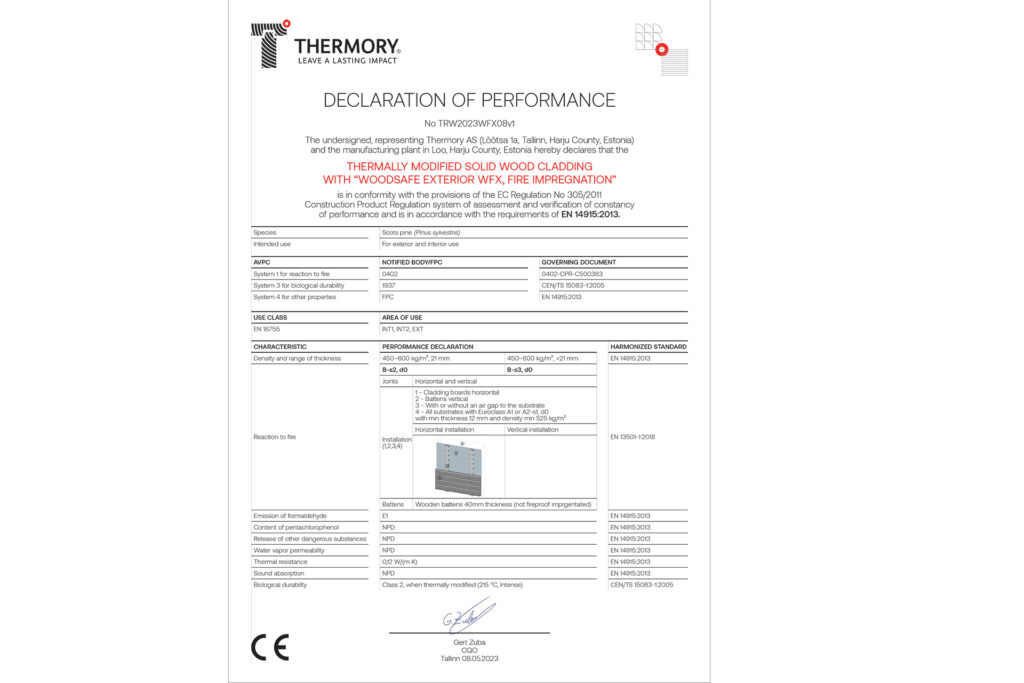
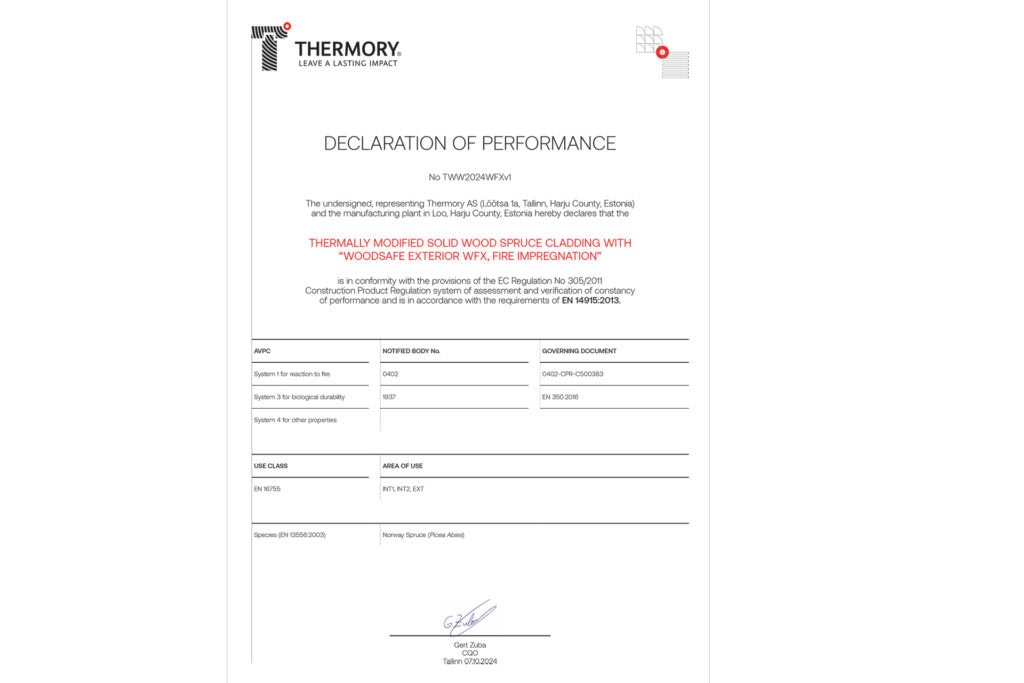
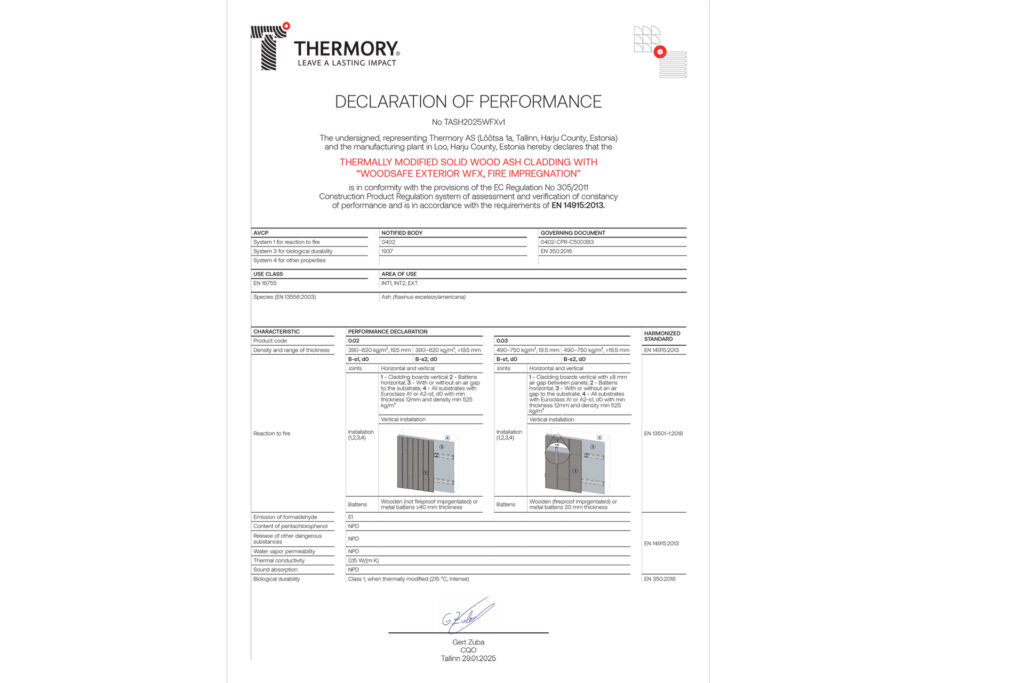
| CPR 305/2011 | Declaration of Performance and traceability |
Relevant documentation, including Declarations of Performance and classification reports, should be used for specification and approval processes.
These standards provide architects and specifiers with the documentation required to specify fire-retardant timber in exterior timber cladding projects across different markets.
Fire performance of coated Thermory products
Thermory cladding can be combined with selected coating systems and fire-retardant treatments to achieve different reaction-to-fire classifications depending on the final system configuration.
Fire classification depends on the complete system, including wood species, treatment, coating, and installation conditions.
Euroclass B – Fire-retardant systems
Thermory cladding treated with WOODSAFE® WFX™ can achieve up to Euroclass B-s1, d0 for Thermo-spruce, Thermo-pine, thermo-radiata pine and Thermo-ash.
Euroclass C – Coated fire-retardant systems
When combined with specific coating systems, fire classification may vary depending on the full system. Performance must be verified through documentation.
Euroclass D – Standard coated cladding
Thermory coated cladding without fire-retardant treatment typically falls within standard wood classifications.
Euroclass E–F – Lower performance systems
These classifications generally apply to untreated or certain coated materials and are not suitable where enhanced fire performance is required.
Not all coated systems are included in the Constancy of Performance. Some solutions are based on initial test reports only. Always verify project-specific documentation and tested system configuration.
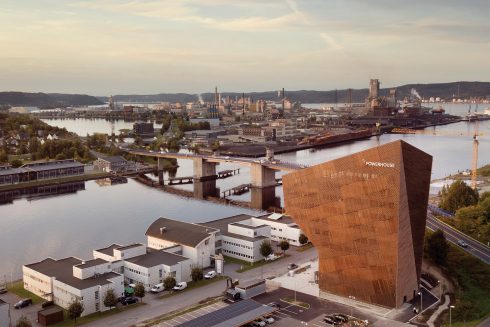
Fire retardant wood in projects

How does Woodsafe compare to other fire protected solutions?
General FAQs
What is fire-retardant wood?
Fire-retardant wood is timber that has been specially treated to reduce its contribution to fire and improve its reaction-to-fire performance compared with untreated wood. Unlike standard timber cladding, fire-retardant timber can achieve higher Euroclass classifications, making it suitable for projects where enhanced façade fire performance is required.
How does fire-retardant wood treatment work?
Thermory fire-retardant timber is treated using the WOODSAFE® WFX™ process. Fire-retardant agents are impregnated deep into the wood under vacuum and pressure, then fixed within the material through a controlled curing process. This creates a fire-retardant treatment documented for exterior use.
What fire classification can Thermory fire-retardant timber cladding achieve?
Depending on the tested system configuration, Thermory fire-retardant timber can achieve up to Euroclass B-s1,d0 according to EN 13501-1. The achieved classification always depends on the complete façade system, including the timber species, treatment, coating and installation method.
Can fire-retardant timber be used for exterior timber cladding?
Yes. Thermory fire-retardant timber is documented for exterior use in accordance with EN 16755 EXT. This standard evaluates the durability of reaction-to-fire performance under weather exposure, making it suitable for exterior façade applications when installed according to the tested system.
What documentation is available?
Thermory provides project documentation including:
– Declaration of Performance (DoP)
– Euroclass classification reports
– Installation guidance
– Technical specifications
Additional project-specific documentation can be provided where required.
Technical FAQs
What does Euroclass B-s1,d0 mean?
Euroclass B-s1,d0 is the European reaction-to-fire classification defined in EN 13501-1.
B = limited contribution to fire
s1 = very low smoke production
d0 = no flaming droplets or particles
It is one of the highest reaction-to-fire classifications that can be achieved by combustible façade materials such as timber.
How long does the fire-retardant treatment last?
The durability of Thermory’s fire-retardant performance for exterior use is documented according to EN 16755 EXT. Long-term performance depends on the specified façade system, installation details, maintenance and environmental exposure. Always refer to the relevant project documentation and installation guidance.
Does the treatment affect the appearance of the wood?
The treatment is designed to preserve the natural appearance and texture of Thermory thermally modified wood. Like all exterior timber cladding, the surface will naturally weather over time unless protected with a suitable coating.
Does fire-retardant wood become fireproof?
No. Fire-retardant wood is not fireproof. It remains a natural timber product, but its reaction to fire is significantly improved compared with untreated wood, helping to reduce flame spread, smoke development and flaming droplets.
Do I need special fasteners?
Yes. Stainless steel fixings are required for exterior applications. The façade should always be installed according to Thermory installation guidelines and the documented tested system.
Do coatings affect fire performance?
Yes. Fire performance depends on the complete façade system, including the timber species, fire-retardant treatment, coating system and installation build-up. Always verify that the selected coating is included in the documented system configuration.
Can coated products achieve documented fire performance?
Yes. Selected Thermory coated products can achieve documented fire classifications when used as part of an approved tested system. The final classification depends on the complete combination of timber species, fire treatment, coating and installation.
Can fire-retardant timber be used on high-rise buildings?
Project suitability depends on national building regulations, the required fire classification and the approved façade system. Thermory can assist architects, specifiers and developers with project-specific documentation and technical guidance.
What information is needed to review my project?
To recommend the appropriate fire-retardant timber solution, Thermory typically requires:
- project location
- building type
- building height
- preferred timber species and profile
- coating requirements
- target fire classification
This allows our technical team to recommend the appropriate documented system for your project.

Have a project that requires a fire-retardant timber façade?
Contact Thermory for expert guidance on specifications, documentation, and possible façade system applications. Our team is here to help you navigate technical requirements and documentation.
